By Gary Cuneen, Founder/Executive Director, Seven Generations Ahead
The clean energy landscape is at a critical juncture. The “One Big Beautiful Act’s” phase-out of federal solar and wind tax credits, set for July 4, 2026, has clean energy companies and advocates in a frantic race to launch projects while incentives still exist. This imminent shift begs a crucial question: What are the next steps to ensure private capital continues to drive clean energy development in the United States, particularly here in Illinois and across the Great Lakes region?
These policy changes – and the answer to this question – could affect Seven Generations Ahead (SGA) and partners’ work driving clean energy development in Chicagoland and beyond. It also affects the communities working to bring clean energy to local businesses, institutions, and residents in order to achieve sustainability goals, improve air quality and health outcomes, and see economic benefits. These are the ways federal policy is felt at the local level.
The success of the now-phasing-out Inflation Reduction Act (IRA) cannot be overstated. As former U.S. Energy Secretary Jennifer Granholm highlighted at COP29 in Baku, Azerbaijan, the IRA has already generated over 300,000 clean energy jobs, with a significant portion in Republican states. Analysts suggest the IRA has leveraged an astounding $10 in private capital for every $1 of federal tax credits. This demonstrates a fundamental truth echoed by leaders like former U.S. climate envoy, John Kerry at past UN COP summits: private capital is indispensable in the climate fight, and governmental action is key to leveraging this investment.
The recent Aspen Ideas Climate Chicago 2025 Conference offered a glimpse into potential state-level solutions. At the conference, former Washington Governor Jay Inslee advocated for states to emulate Washington’s “Cap and Invest” program. This innovative approach creates a market for carbon allowances, generating revenue through emissions allowances that are then reinvested into clean energy projects, thereby stimulating private investment. Such a model provides a sustainable, self-funding mechanism for clean energy growth.
The Cross Community Climate Collaborative (C4) is already demonstrating how to maximize on-site solar opportunities, even with existing tax credits. C4 is an award-winning initiative that brings together underserved and resourced communities to drive climate, equity, and sustainability outcomes. It is co-founded and led by the mayors of Oak Park, River Forest, and Broadview, as well as the Urban Efficiency Group and SGA.
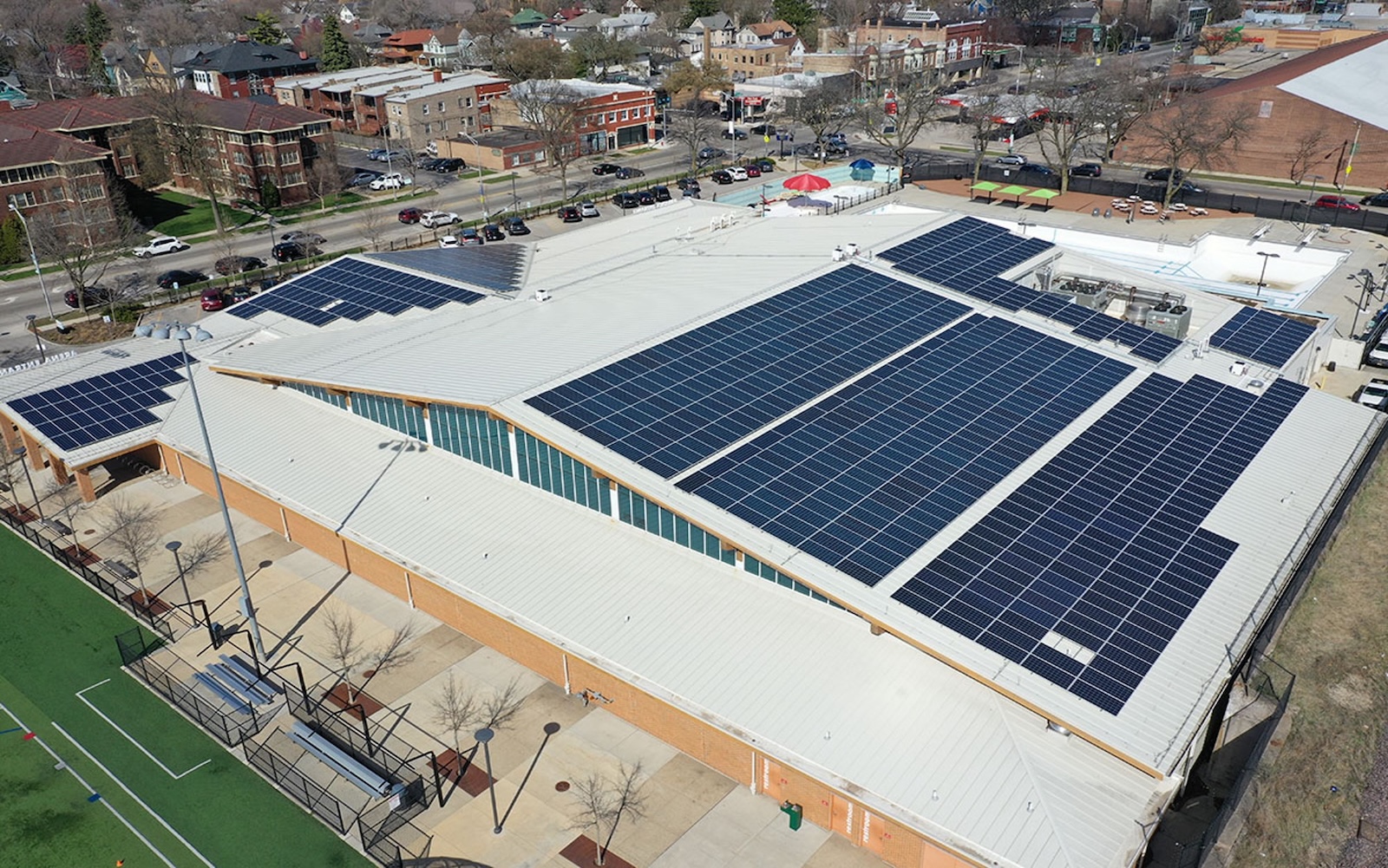
By leveraging IRA tax credits to reach the 40% threshold that many investors require for project viability, and by specifically targeting residents and institutions in underserved communities, C4’s clean energy work is enabling public institutions and residents to have solar installed on-site at no cost, with no responsibility for operations and maintenance. Electricity is then purchased back through Power Purchase Agreements (PPAs) at reduced rates. While not the only model, this PPA-driven approach empowers capital-strapped institutions and residents to actively participate in the renewable energy transition.
This leads us to the pressing question for Illinois: What are our next clean energy policy and program options to maintain private capital investment?
Illinois already possesses a strong foundation with its Climate and Equitable Jobs Act (CEJA), which mandates 100% carbon-free electricity by 2045 and provides state-level incentives, including for residential solar and electric vehicles. However, with the federal IRA credits winding down, more action is needed.
Could Illinois create its own “Inflation Reduction Act” or a similar value model that approaches the 40% clean energy tax incentive/value threshold that private capital seeks? Or perhaps partner with other Great Lakes states to create a regional incentive structure? The Great Lakes region has already seen over $40 billion in new energy transition investments since 2021, particularly in EVs and batteries, demonstrating significant regional potential. A coordinated, multi-state approach could create a larger, more attractive market for investors.
Another avenue to explore is the combination of existing tax incentive models into a “braided” tax credit program. By strategically layering state and local incentives, Illinois might achieve a threshold large enough to continue spurring large-scale capital investment, even without the robust federal support. This could involve enhancing existing programs like Illinois Solar for All and the Illinois Shines program (which offers Solar Renewable Energy Credits, SRECs).
The answers to these questions will undoubtedly require bright financial minds to meticulously analyze Illinois’s specific economic and energy landscape, as well as potential collaborative opportunities with neighboring states.
We are at a moment of tremendous shift and opportunity. Regardless of who occupies the White House, our ability to keep advancing impactful clean energy will increasingly depend on innovative state and local policies that effectively leverage the power of private capital. C4’s work to successfully drive community-based clean energy development shows the tremendous benefits strong clean energy policy can have.
The future of clean energy in Illinois and the Great Lakes region, and of our work building healthier and more sustainable communities for generations to come, hinges on our next strategic moves.
We invite you to read a version of this article published in the Crain’s Chicago Business op-ed section: https://www.chicagobusiness.com/opinion/next-steps-driving-illinois-clean-energy-policy-opinion