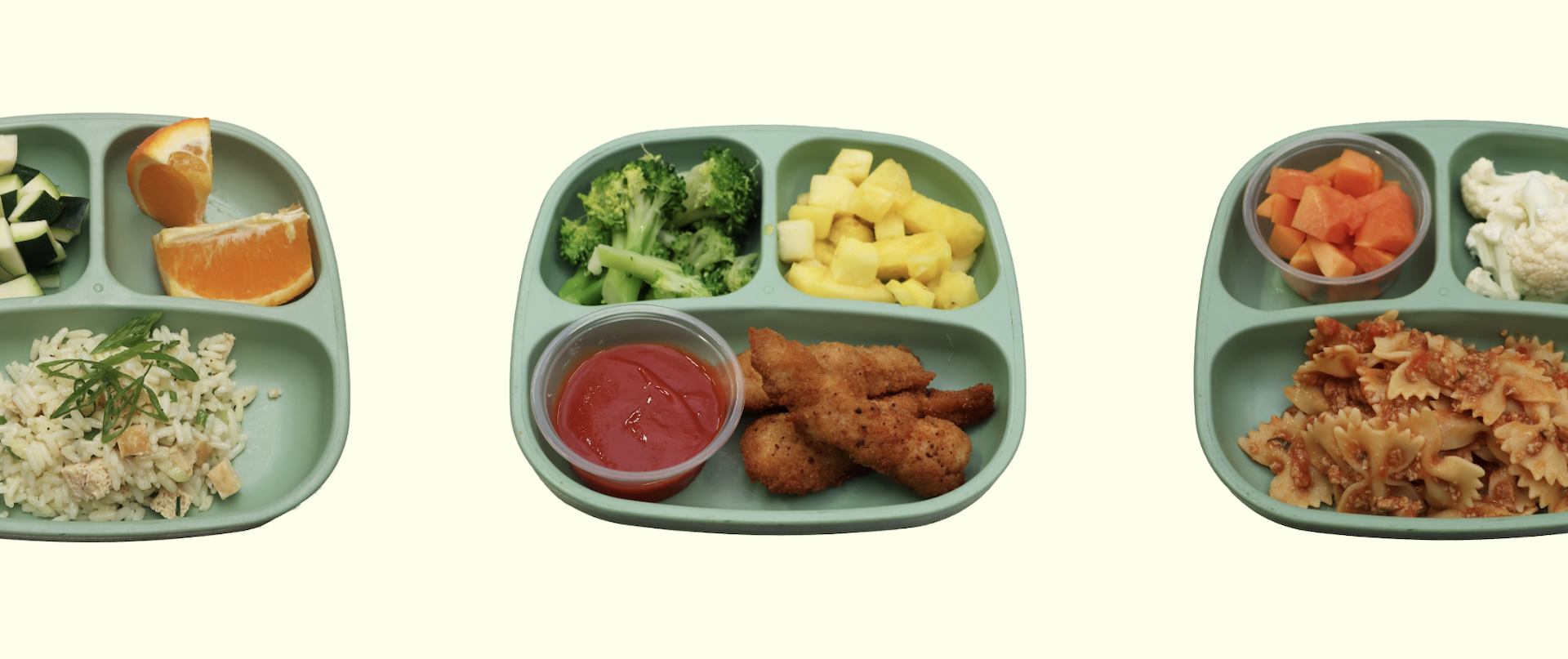
For over 20 years, Beyond Green Partners has been transforming school kitchens across Illinois, proving that it’s possible to shift from processed foods to scratch cooking and local ingredients, all while staying within budget. In 2024, Beyond Green Partners won an Innovation Collaborative Award grant from the Lake Michigan School Food System Innovation Hub. The Innovation Hub is funded by the USDA and convened by the Illinois Public Health Institute. Seven Generations Ahead serves as the Illinois State Lead for the hub. This grant supports Beyond Green Partners’ project: “Buy Local, Cook Fresh Illinois,” in which a cohort of three rural Central Illinois schools will collaborate and learn from each other, while Beyond Green Partners helps guide them in transforming their food service programs to scratch-cooking operations that use locally sourced ingredients.
Greg Christian, founder of Beyond Green Partners, is passionate about bringing fresh, healthy local food to kids, while helping school kitchens cut costs, get more efficient, and cook meals students love. And he says the money is already there for this work, schools just need to learn how to unlock it.
Sourcing Local and Connecting with Schools:
Beyond Green Partners has a holistic approach to procuring local food and engaging with schools to develop menus that work for both the kitchen staff and the students. This approach includes:
- Vendor Collaboration: They start by working with existing food vendors to see what they can get locally, then seek out local food aggregators, attend farmer’s markets, or find other avenues to procure local food for schools.
- Empowering Kitchen Staff: Beyond Green Partners focuses on teaching kitchen staff how to cook in bulk. The emphasis is on building skills and confidence in washing, cutting, and cooking fresh ingredients. Once staff get the hang of a new way of working in the kitchen, they can cook almost any vegetable.
- Kid-Centric Menus: They prioritize what kids want to eat and what the kitchen staff enjoy making, recognizing that cooks know their community best. They start with meals that feature primarily conventional items, gradually introducing scratch-cooked and local elements. This approach allows schools to set their own pace when transitioning to scratch cooking.
- Taste Testing and Feedback: Meal ideas and feedback are gathered from students in classrooms (which helps avoid peer influence in cafeterias). Beyond Green Partners collaborate with cooks to develop recipes. Before a new dish is rolled out to the school, it’s taste-tested by small groups, tweaked, and re-tested until it’s hit with the kids. This inclusive approach means the school community is more invested in the meals, and it also means kids are more forgiving on the occasions that a meal is not a “homerun,” in Christian’s words.
Close collaboration with students, school staff and kitchen staff is the cornerstone of Beyond Green Partners’ approach.
“Kids love it because they have a say,” says Christian. “We always call them customers. We tell them: ‘we want your ideas because we want you happy.’”
Financial Sustainability and Impact:
Despite the loss of federal funding for local food in schools and an unpredictable federal policy and funding landscape, Christian says he’s not concerned about being able to continue this work. That’s primarily because they’ve found so much waste in school kitchens. Christian says there can be a disconnect between the front office and the cafeteria, which often leads to food waste because kitchens wind up with more food than they need. Part of Beyond Green Partners’ approach includes bridging that communication gap and having a more accurate understanding of the needs in the kitchen. Schools end up saving money, even though they’re buying fresh local food, because they’re buying less.
The result is that Beyond Green Partners often has schools achieving 40-50% local food within budget, operating at cost-neutral, or even saving money. Christian is so confident they can work within budget that they guarantee the change will be cost-neutral.
The other way they achieve cost savings for schools is by optimizing labor in the kitchen. They introduce a style of kitchen prep called “swarming,” where staff work together without fixed stations, jumping in where needed. While this can be a challenging shift from traditional “European style” siloed kitchens where each person works at their own station, it significantly improves efficiency. Many school district food leaders are initially skeptical that this approach is cost-neutral and doesn’t require more labor, but Beyond Green Partners has proven it’s possible.
Christian says schools can reach about 20% scratch cooking without major changes in the kitchen, but to get to 30-40%, a shift in practices is necessary. Beyond Green Partners sets achievable goals, like reaching 40% scratch cooking by the end of the school year, which Christian says schools often embrace and achieve. Twenty years of experience in this work has taught Christian that it’s not only possible to cook local food from scratch in school kitchens, but it’s a win-win for their students, staff, and budgets.
A Success Story: Pawnee Elementary School
Pawnee Elementary School in Sangamon County is a prime example of Beyond Green Partners’ impact. Funding from the county paid for Beyond Green Partners’ services, so there were no upfront costs for the school. After two years, Pawnee is at 92% scratch cooking and 40% local food, with no additional labor. According to Christian, the kitchen staff have said the difference in the food they’re now serving is “night and day” from what it was before.
“The kitchen is alive and happy,” says Christian. “There’s a purpose and it’s palpable. They really want to make the best food.”
This is the second in a series of articles about forging ahead with farm to school in Illinois, despite federal funding cuts and policy changes. Stay tuned as we tell the story of a school district that has had tremendous success with farm to school, despite the barriers. And please check out our first story on farm to school policy if you haven’t already.