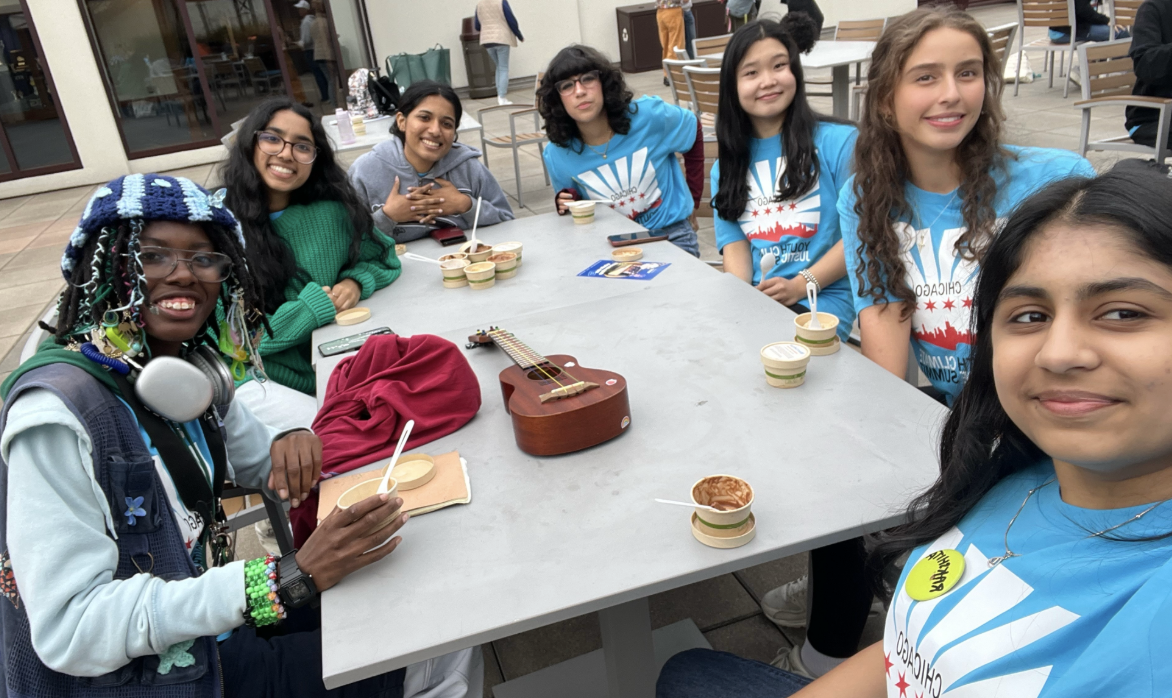
Last month, SGA’s youth centered programs, Zero Waste Schools (ZWS) and It’s Our Future (IOF), partnered to help a west suburban high school turn their ideas into action. Students at Proviso West High School had created a Climate Action Plan (CAP) at the Youth Climate Justice Summit (YCJS) hosted by IOF this past October. Along with 100 students from 22 schools, they attended a variety of relevant workshops that helped inform the plan and also met with experts who shared ideas about what strategies might be most impactful. During these conversations at the Summit, members of Proviso West’s Scholars Ending Environmental Destruction (SEED) club decided to focus their CAP on reducing waste at their school. After the Summit, the SEED club joined IOF’s weekly office hours in order to receive tailored support from the IOF and ZWS team and determined that a cafeteria waste audit would be an ideal way to get started on their sustainability journey.
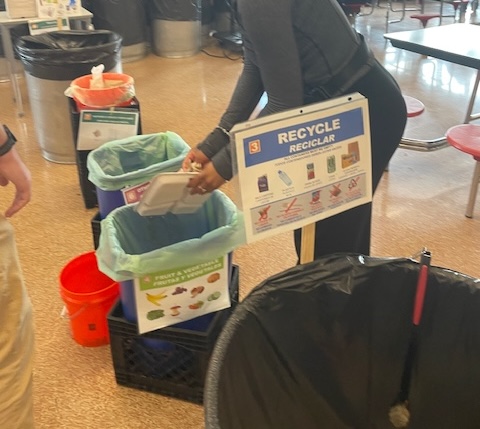
The waste audit, conducted on January 21, analyzed all waste streams, including liquids, recycling, food scraps, untouched recoverable food, and landfill. The SEED team assisted peers as they sorted their waste and helped ensure that everything was placed in the correct container to avoid contamination. At the end of the audit, students helped weigh, count, and record the data. Club sponsors were very excited to see their students take active steps to improve their school community, so much so that they gave the SGA team hoodies, making them honorary members of SEED!
Using the data collected, the ZWS team created pie charts of the audit results to provide the school community a visual representation of their waste streams. The data showed that the majority of waste generated could be diverted from the landfill, while only a small amount actually needed to be discarded.
The following week, ZWS met with the students to discuss the data and their impressions from the audit. Students were surprised by the quantity of food being thrown away during each lunch period but also understood that there could be many factors contributing to this waste. The conversation resulted in the following action steps:
- Increase education and communication by printing out large versions of the audit results and make announcements
- Create student surveys about the school lunch to find what items are preferred in order to inform menu planning
- Increase share table awareness through announcements during lunch, add signage, and have members of SEED collect share table eligible items from lunch tables
- Incorporate sustainability and food waste lessons into the school curriculum
We look forward to hearing what the SEED students have learned and accomplished at IOF’s Climate Action Plan celebration in April! They are sure to inspire others to start putting their ideas into action.