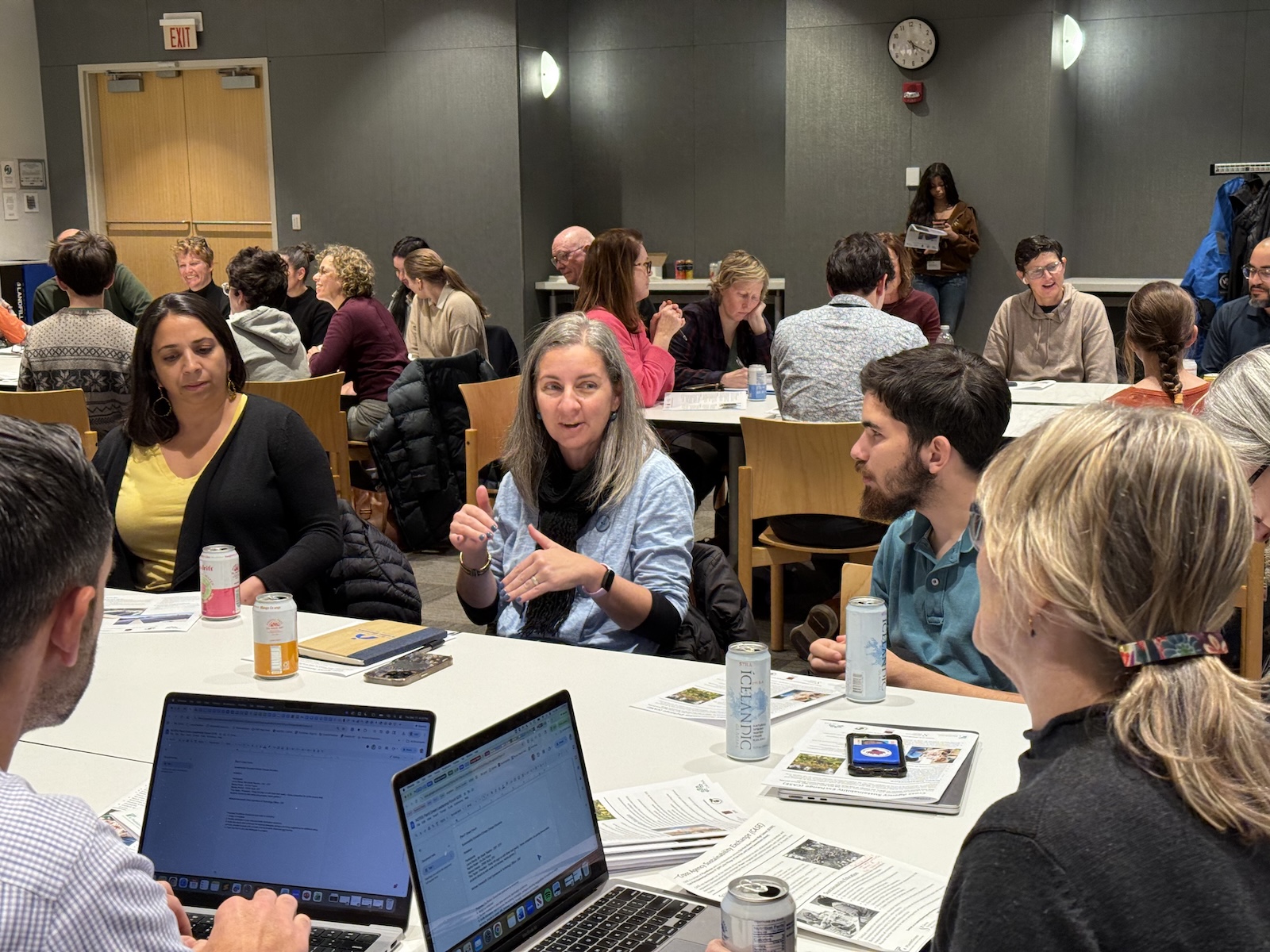
On Thursday, September 25th, dozens of elected officials and community leaders from west suburban Chicago met to discuss the future of climate action in their region. The Cross Community Climate Collaborative (C4) hosted the C4 Mayoral and Cross Community Forum at Triton College. The focus of the day’s discussion was on strategies for moving forward on regional climate and sustainability goals in an increasingly uncertain federal policy landscape.
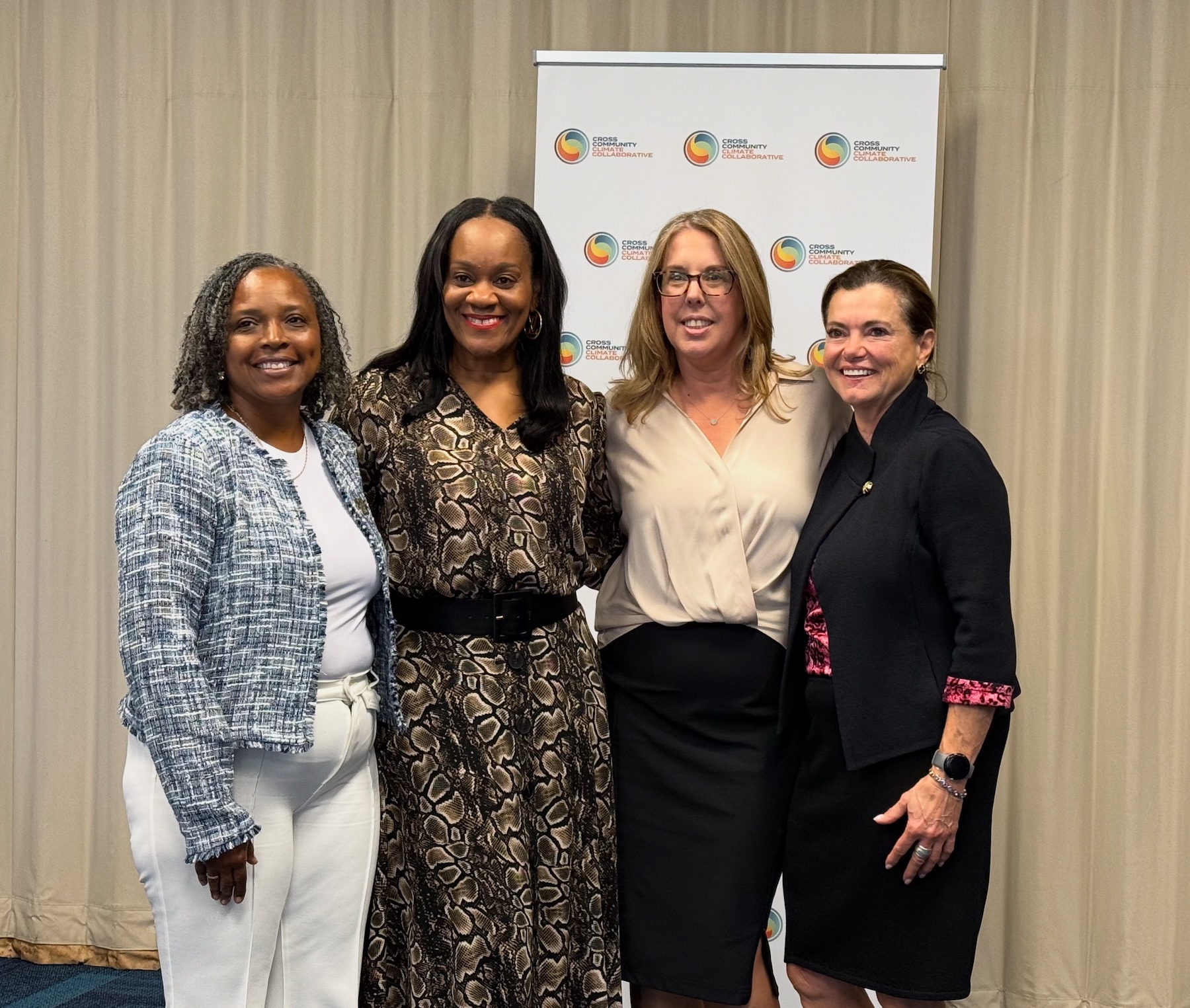
C4 is an award-winning initiative that brings together underserved and resourced communities to drive climate, equity, and sustainability outcomes. It was founded and is co-led by Broadview Mayor Katrina Thompson, Oak Park Village President Vicki Scaman, and River Forest Village President Cathy Adduci, along with Urban Efficiency Group CEO, Darnell Johnson, and Seven Generations Ahead’s Executive Director, Gary Cuneen.
In her opening remarks, Mayor Thompson emphasized that climate issues don’t stop at the borders between communities, and when we focus on shared values and shared goals, we can achieve real change.
“The C4 framework ensures every community, regardless of zip code or background, has clean air, clean water, and clean energy,” she said.
Cuneen explained that the C4 framework brings key assets that advance climate and sustainability goals. These include: peer learning and replication, engaging technical experts, and identifying specific projects and securing funding for that work. The regional, cross-community approach allows C4 to take what Cuneen describes as “big swings” – pursuing large-scale, high-impact projects that achieve measurable greenhouse gas reductions and concrete progress on sustainability goals.
But, as Johnson noted, C4’s work is not just about data and the nuts and bolts of building greener communities. “Sustainability is also about people, human lives,” he said. “We have a civic responsibility to ensure we do all we can to promote equitable and inclusive treatment of all human beings.” Johnson wants every resident of a C4 community to truly see and feel the value of a cleaner and more sustainable community.
After opening remarks, Johnson facilitated a panel discussion with President Adduci, President Scaman and Mayor Thompson in which the C4 leaders highlighted the importance of collaboration and local action right now. Mayor Thompson explained that her commitment to working on climate and sustainability issues both in Broadview and across community lines began after her cousin tragically died of asthma. She said this drove her to think about what public safety really looks like: clean air, clean drinking water, clean energy, flood mitigation. These things impact community health, quality of life, and economic vitality. This was the spark that would ignite Mayor Thompson’s commitment to sustainability and to creating C4, recognizing that these problems affect everyday people and cut across community lines.
“No matter where you live, we’re all impacted,” said Mayor Thompson. “It’s important that we as communities stop working in silos.”
Johnson and Cuneen have dubbed this commitment to inclusive climate action as “sustainability solidarity.” President Scaman said it was important to her that Oak Park worked with neighboring communities and across economic and racial lines to understand and mitigate the unintended consequences that can come with local policy. She cited Oak Park’s ban on gas-powered leaf blowers as an example of policy that could have negative consequences for small businesses and vulnerable communities. She explained that working to understand these impacts strengthens Oak Park’s sustainability policy and allows the community to problem-solve.
President Adduci noted that River Forest has had the advantage of learning from Oak Park and neighboring communities, and has been able to enact more equitable environmental policies because of cross-community collaboration.
“You’ve given us a treasure. You’ve given us the ability to open our eyes,” she said. “If we have the resources, we should help you. If you have the resources, you should help us.”
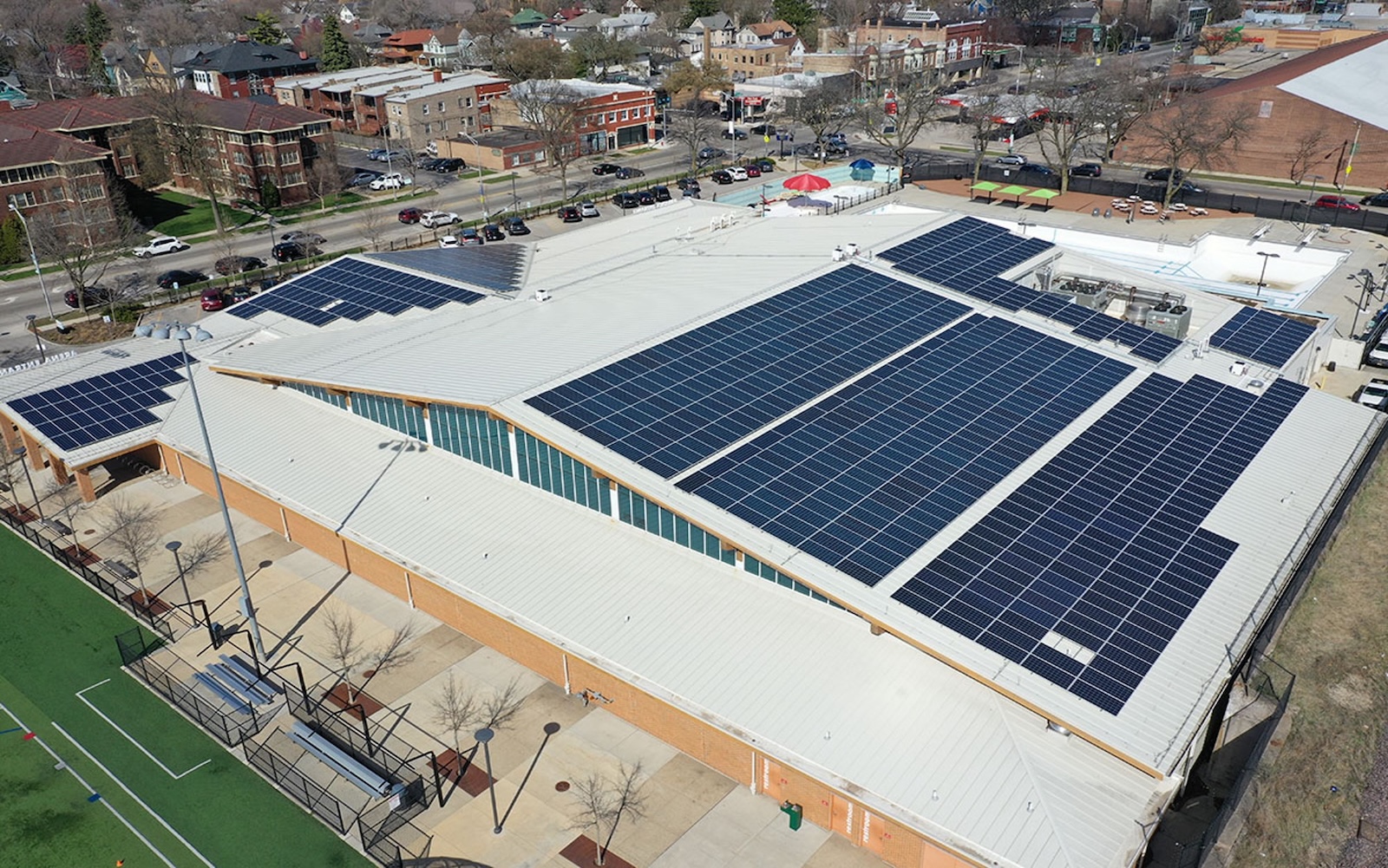
This spirit of “sustainability solidarity” is perhaps most apparent within C4 communities when it comes to grant funding for community projects. President Scaman said it’s key to the C4 framework when going after grant funding to look at where it’ll have the most impact, and direct those dollars to that community. And all three leaders said their responsibility to taxpayers is front and center, which is why projects that save residents and businesses money, like on-site and community solar projects, are so important.
Illinois State Senator Kimberly Lightford was in attendance, and she spoke to the audience about the importance of state legislation to support local climate and sustainability action. She also emphasized the need to engage young people in local and state climate policy.
“It’s important to make young people feel comfortable, to listen and learn,” she said. “Because they are our future and we need them on everything.”
After the leadership panel, the audience heard presentations on C4 projects, including progress on on-site and community solar development, electric vehicle infrastructure, workforce development and youth programming. These projects highlighted C4’s commitment to equitable, scalable, collaborative work that drives sustainability goals at the local level and centers the human impact of this work.
“We needed to change the narrative to focus on collaborations and partnerships, because we can do so much,” said Mayor Thompson. “The Black community was shut out on environmental justice for so long. It’s a human rights issue.”
President Scaman summed up how the C4 framework helps to address the issues Mayor Thompson highlighted and promote sustainability solidarity.
“Collectively, we can advocate to problem-solve these challenges and barriers,” she said.