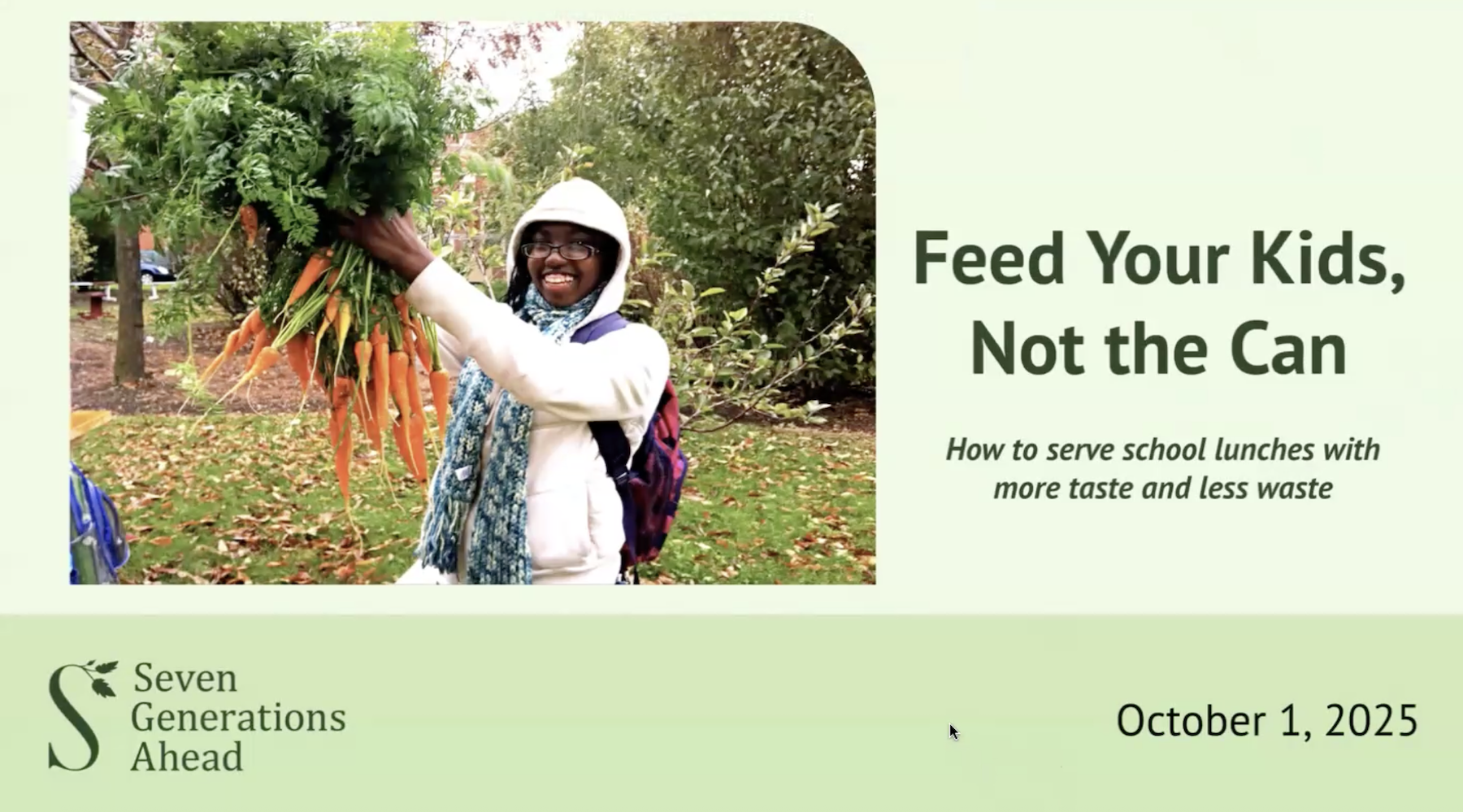
On Wednesday, October 1st, Seven Generations Ahead (SGA)’s Zero Waste Schools team and Illinois Farm to School Network (IFSN) hosted “Feed Your Kids, Not the Can,” a webinar highlighting how schools can serve lunches with more taste and less waste. Speakers shared practical strategies and valuable resources for serving local foods in school meals and tips on how to minimize food waste in the cafeteria. Delicious, fresh food and a few simple strategies can ensure students are eating more and wasting less.
The webinar kicked off with an overview of SGA’s Farm to School program from Senior Program Manager, Diane Chapeta. The program helps schools bring healthy, local food into cafeterias and implement scratch cooking. Initiatives like the Great Apple Crunch and Harvest of the Month (HOTM) provide resources that make local food and healthy eating fun and accessible for students, while providing staff the training and tools to more easily integrate fresh food into school lunches.
Allison Brown, District Manager for OrganicLife in Wheeling School District 21, shared her Farm to School journey. Brown learned about IFSN after she came to Wheeling and first became involved through the Great Apple Crunch.
“It’s fun to get everyone involved in it. Everyone has a great time,” she said. “If you want to get started with something, this is the easiest thing.”
Brown connected with other food service directors with whom she attended trainings, shared information, and mapped progress. She started small, with innovations in their menus, using HOTM as a guide to highlight fruits and vegetables. They began introducing new items, adapting familiar recipes, and eventually conducting taste tests and gathering feedback from students to refine meals. Eventually, she even incorporated aeroponic gardening, with indoor garden towers to grow lettuce, tomatoes, peppers, and other items for their salads and deli bar.
Brown attributed their success to the support of IFSN, as well as feedback from student advisory groups, parent engagement, and cultivating partnerships both within the district and with external organizations. Benefits of the program include more student participation in school meals, greater exposure to healthy, local foods, and reduced waste because the students enjoy the scratch-cooked meals.
Becky Brodsky, SGA’s ZWS Senior Program Manager, highlighted the significant issue of food waste in schools. She noted that through waste audits at 28 Chicago Public Schools, her team determined that they have the opportunity to recover 43.9 tons of edible food annually, showing the immense potential to reduce wasted food. Brodsky also shared that serving fresh, local food is a proven waste reduction strategy; food that tastes better gets eaten which reduces plate waste.
She then detailed two other key strategies that schools can easily implement to reduce food waste – share tables and Offer vs. Serve (OVS). Share tables divert food from landfills by giving students a place to put unopened, factory-sealed items or whole pieces of fruit. These items can then either be re-serviced in the next school lunch or distributed throughout the school to students that might need an extra snack. Brodsky said clear parameters, standard operating procedures at the district level, and a plan for leftover share table items will help ensure maximum diversion.
Whereas share tables are an ideal way to recover edible food, the OVS method prevents food waste from occurring in the first place. With OVS, students have more choice in selecting the foods they would like to eat. They must be offered at least five meal components but need to take only three (one must be a fruit or vegetable) and are not required to take milk. Brodsky emphasized that staff and student education around OVS regulations is necessary for the program to be successful.
Next, Kate Mason-Schultz, Coordinator of Nutrition Services for Evanston/Skokie School District 65, shared her firsthand experience implementing OVS and share tables. She also stressed that conducting regular staff training refreshers is essential. Keeping good production records, fostering trust and communication with staff, and having clear signage are also key to making OVS run smoothly in SD65. Mason-Schultz shared that posting photos of menu items has been extremely helpful because it allows students to make informed decisions.
If students do have uneaten packaged items or whole pieces of fruit from the school lunch, they can place them on the share table. Mason-Schultz said share tables have been relatively easy for the district to implement as part of their food waste reduction processes and that having clear guidelines and signage have been fundamental to this success.
The “Feed Your Kids, Not the Can” webinar provided attendees with a wealth of practical advice and inspiring examples for creating healthier, more sustainable school lunch programs. By embracing initiatives like Farm to School, OVS, and share tables, schools can serve up delicious local food that ensures healthier students and a healthier planet.